How To Stop Decking Becoming Slippery This Autumn

Autumn Leaves: The Hidden Hazard on Your Decking

Autumn brings plenty to enjoy: changing colours, crisp mornings and cooler days. But for outdoor spaces, it also brings a combination that can quickly create a hidden slip hazard – fallen leaves and wet weather.

Leaves might seem harmless, but once they begin to collect on decking, boardwalks, steps and walkways, they can make surfaces far more difficult to navigate safely.

Why do wet leaves become so slippery?

When leaves fall onto an outdoor surface, they begin to break down naturally. Add autumn rain, morning dew and damp conditions, and they can form a wet layer across the surface beneath.

Rather than footwear making direct contact with the decking or walkway, it can instead make contact with this layer of wet leaves and organic matter.

As leaves continue to decompose, the problem can become even less obvious. Dirt, moisture and organic material can collect within and around the surface, creating areas that may look relatively harmless but become slippery underfoot.

This is particularly important in places where people are walking every day, including:

  • Boardwalks and footpaths
  • Parks and public spaces
  • Visitor attractions
  • Schools and universities
  • Commercial developments
  • Residential outdoor spaces
  • Steps, ramps and access routes

Autumn weather can make the problem worse

Leaves are only one part of the equation.

Throughout Autumn, outdoor surfaces are exposed to more frequent rainfall, longer periods of damp weather and fewer hours of sunlight to help surfaces dry.

Shaded areas can stay wet for particularly long periods, while leaves can gather in corners, between boards or around entrances and access points.

What might be a perfectly manageable surface during dry summer weather can therefore behave very differently during autumn and winter.

That makes this time of year an important opportunity to assess outdoor areas before colder and wetter conditions really set in.

Regular maintenance still matters

Even with a well-designed outdoor surface, regular maintenance should form part of an autumn safety routine.

Fallen leaves and debris should be removed frequently, particularly from heavily used routes. Allowing organic matter to build up doesn’t just create an immediate potential hazard – over time, it can also encourage the growth of moss, algae and other contaminants. It’s worth paying particular attention to areas that:

  • Receive limited sunlight
  • Sit beneath trees or vegetation
  • Experience heavy pedestrian traffic
  • Are regularly exposed to standing water
  • Form part of an accessible route, ramp or set of steps

Keeping these areas clear can help surfaces perform as intended throughout the changing seasons.

But maintenance shouldn’t be the only line of defence

You can’t stop leaves from falling, and keeping every outdoor surface completely dry throughout a British autumn isn’t realistic. That’s why the surface itself matters.

For decking projects, slip resistance should be considered from the beginning – particularly where the area is exposed to the weather or used by the public. Choosing a purpose-designed non-slip decking solution provides an additional layer of protection when conditions become more challenging.

At Gripsure, our non-slip decking incorporates durable anti-slip aggregate inserts within the board. These are designed to provide additional grip underfoot and help maintain slip resistance in both wet and dry conditions. For public spaces, commercial environments and frequently used outdoor routes, that can make a significant difference when autumn weather arrives.

Is your outdoor space ready for autumn?

A layer of leaves might look like a normal part of the season, but it can easily conceal a much more slippery surface underneath. Autumn is a good time to inspect decking, boardwalks and external walkways, establish a regular maintenance routine and consider whether the surface offers suitable slip resistance for the way the space is being used.

Because when leaves, rain and damp conditions come together, something as simple as walking across a deck can become more hazardous than it appears!


Designing Accessible Commercial Areas with Timber and Bamboo

Accessibility is a vital consideration for all commercial spaces. Unfortunately, while design and material innovations have evolved greatly over recent decades, many people still face accessibility challenges in built environments.

With over 17% of the UK population classified as disabled or living with a long-term health problem (Office of National Statistics 2021) – consistent and effective accessibility is an essential requirement within our commercial spaces. Among the range of materials commonly used for accessible design, timber and bamboo offer a range of unique and effective options.

In this blog from Gripsure, we explore key factors to consider when creating accessible commercial areas with timber and bamboo, exploring what is meant by accessible design, noting how decking can be used to achieve it, and highlighting the advantages of incorporating accessible design for businesses.

Secure timber and bamboo decking and cladding to support your commercial area – contact us today.

What is Accessible Design?

Accessible design and architecture seek to create buildings, commercial and residential, that can be easily and independently accessed by those with disabilities. Accessible design intends to remove the barriers experienced by those with disabilities to accessing particular spaces and services.

The principles of accessible design go beyond creating commercial areas that simply meet legal requirements, instead creating spaces that are inclusive, inspiring, and respectful. By eliminating physical barriers, those with additional access needs are able to navigate, interact, and engage fully with built spaces.

Accessible design for commercial spaces will take into consideration factors such as:

Universal Design

Universal design is centred around creating spaces and environments that are usable by all people – regardless of age, size, ability, or other access-inhibiting factors.

Physical Accessibility

Physical accessibility pinpoints any access limitations brought about by physical mobility challenges. Design informed by physical accessibility will prioritise features such as ramps, lifts, widened doorways, and accessible toilet facilities.

Sensory Considerations

In addition to physical considerations, accessible design will also take sensory factors into account. This might include the incorporation of visual cues as well as tactile indicators for those with sight impairment. Commercial areas may also consider incorporating auditory signals to maximise scope of support.

Wayfinding and Orientation

Another key factor within accessible design is wayfinding and orientation. These refer to design considerations that make it as simple to move throughout a commercial space as possible. Features might include:

  • Further signage
  • Clear colour
  • Texture contrast
  • Intuitive layouts

Prioritisation of features such as these assists individuals with a range of impairments in navigating through the designed space.

How can Decking be Used for Accessible Design?

Timber and bamboo decking can be used in a range of accessible designs throughout numerous contexts. These include:

  • Boardwalks
  • Walkways
  • Bridges

When designing an accessible timber or bamboo walkway, there are a number of factors to consider, such as the width of walkways, the installation of handrails, drainage and edge boards.

When creating walkways, developers must consider whether a walkway will be one way, or two. They must also consider the likely quantity of traffic that may be directed to the walkway from connecting ones when considering width.

Where handrails are installed, a minimum width of 2000mm is recommended between the handrails and the edging boards. To maximise drainage without compromising accessibility, there should also be gaps no greater than 12mm between each non-slip decking board.

The range of non-slip and bamboo decking available from Gripsure offer an ideal material for accessible walkways and bridges.

Maintaining Your Decking

In addition to being designed and installed with accessibility in mind, it is also essential that developers arrange regular maintenance to ensure all walkways remain usable. An accessible walkway that is unfit for use provides no benefit to individuals with additional access requirements, instead excluding them a given commercial environment.

As well as being great for walkways and bridges, decking can also be used for ramps and gradients. In order to be defined as such, a ramp must feature a gradient steeper than 1:20 (5%), but no more than 1:12 (8%).

A safe and effective ramp will feature a gradual change in gradient, with no sudden or inconsistent variation. As with walkways and bridges, ensuring the decking chosen is non-slip, such as those available from Gripsure, maximises safety and accessibility.

It is also important for designers to ensure no ramp exceeds 10m in length and to note that any ramp over 500mm off the ground will require a level platform. Similarly, consistent checks and maintenance of ramps are essential to maximise accessibility.

What are the Benefits of Employing Accessible Design for Businesses?

Fulfil Legal Requirements and Reduce Complaints

In the UK, the Equality Act 2010 requires shops and businesses to make ‘reasonable adjustments’ to maximise accessibility for disabled people. Not only is compliance with this essential to ensure your business avoids fines – it also reduces the likelihood of receiving accessibility-related complaints.

Benefits for Everyone

In addition to maximising accessibility for those with disabilities, accessible ramps and walkways also offer benefits for service users who may have a mobility reducing injury or even those with pushchairs. By maximising accessibility, a business curbs accessibility limitations to all prospective customers – maximising customer numbers and profits.

Public Reputation

In a world where inclusivity is more important than ever, the benefits of accessible commercial spaces extend beyond fulfilment of legal obligations. By offering customers a clear indication that their customer experience is of high priority, businesses convey an affirmative public message about their inclusivity, sensitivity, and commitment to accommodating all customers. This choice not only attracts more customers, but has a positive impact on a business’s overall reputation.

Enhance Accessibility with Decking from Gripsure

Here at Gripsure, we have almost 2 decades of industry experience helping our customers create beautiful and safe spaces for use across a range of industries. Our selection of non-slip decking includes softwood, hardwood, modified timber and bamboo decking – ideal for use in accessible design for commercial spaces.

We’re committed to continuously improving how we operate and are always seeking to achieve the highest environmental, ethical and safety standards. If you’re looking for guidance on timber and bamboo decking and cladding materials for your next building project, get in touch today– we’re always on hand to help!

Learn the benefits of timber vs bamboo decking >

Discover what makes decking slippery and how to avoid it >

Find out why you should consider bamboo decking for your next design >

Bamboo Decking: The Sustainable Non-Slip Choice for Your Garden

If you’re looking to make garden improvements that aren’t at the expense of the world’s forests, bamboo decking is the answer.

Bamboo decking is a great, sustainable choice for your garden. It’s got just as many qualities as both softwood and hardwood decking. More people are looking to make sustainable choices as they consider their impact on the planet. You don’t need to settle for composite decking and suffer in slippery silence. If you’re looking to make improvements that aren’t at the expense of the world’s forests, bamboo decking is the answer.

But what exactly is it about bamboo that makes it so good for garden decking?

Just how sustainable is it?

Technically, bamboo is not a tree. It’s a type of grass. There are over 1600 different types of it on the planet. These can often be found in tropical, sub-tropical and mild climates. Depending on the variety, bamboo is native to Asia, Africa, South America, and parts of Australia. Just like hardwood and softwood, there are different ways you can categorise bamboo with each having its own traits.

Bamboo is also renowned for its incredible rate of growth. The Moso species of bamboo, for example, can grow up to one metre every day. Native to Asia, it can reach a maximum growth height of up to 20 metres.
Compared to most trees, bamboo can also release 35% more oxygen and absorb five times more CO2. This can help to offset the carbon output of the world to reduce the effects of climate change.

Moso bamboo has an underground system of roots that can connect a whole host of other bamboo plants. When one strand of bamboo is cut down, it will quickly grow back on its own. This reduces the demand on the farmers as its fast replenishing not fast depleting.

Bamboo is also naturally pest-resistant thanks to its tough outer layer which means there is no need to use harmful chemical pesticides.

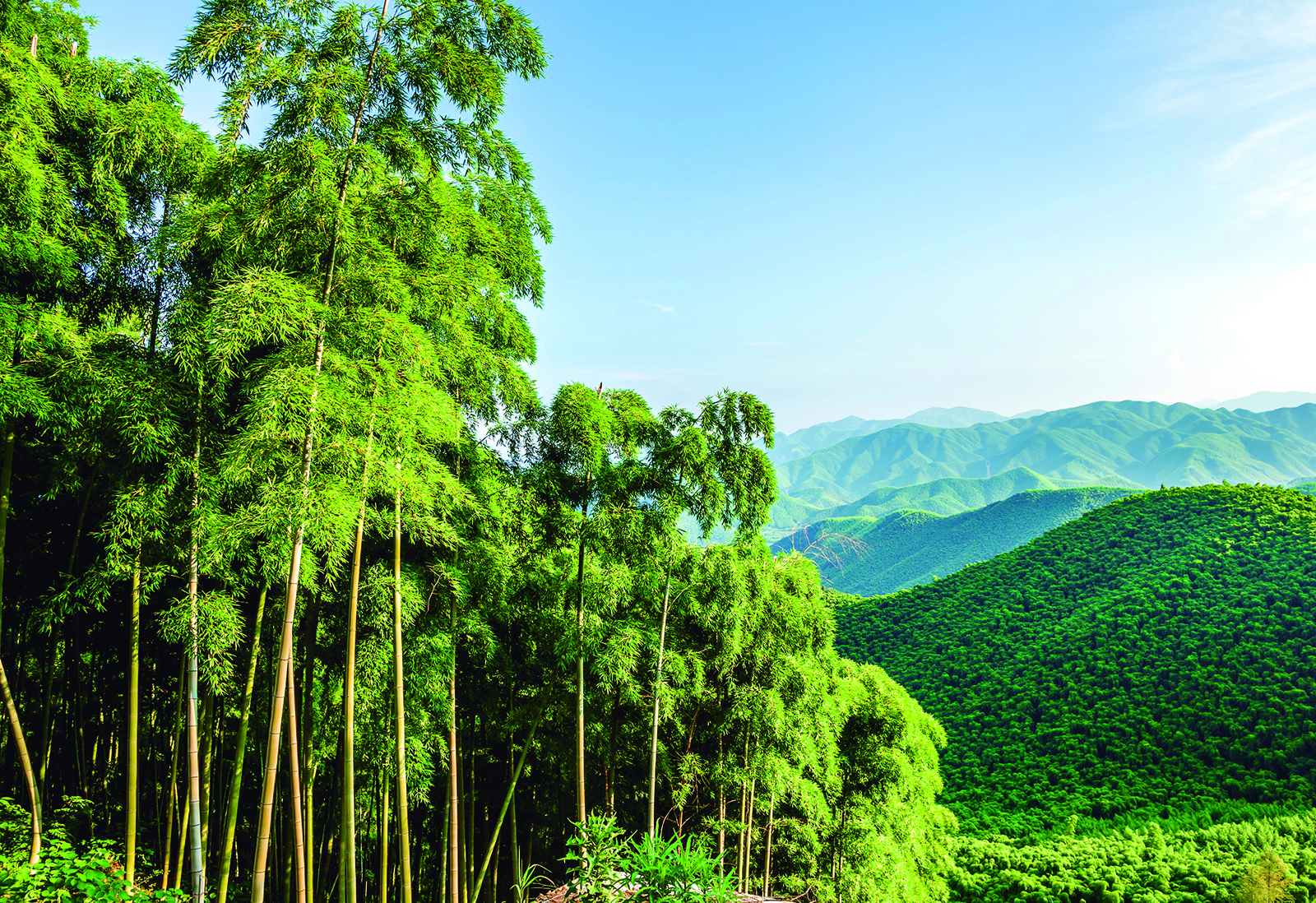
Moso bamboo decking

Whilst bamboo doesn’t look as robust as a typical hardwood tree, it actually has a strength level higher than steel. This durable, strong material sees uses within the construction industry and is often used to make floors, furniture and even helmets.

Aside from that, it can be eaten, turned into clothing, used for your garden decking and more. Whilst hardwoods typically take 50 years to mature, Moso bamboo matures in just four to five.

Look at it like this. Bamboo decking has an expected service life of between 30 and 50 years. During this lifetime, the same bamboo used to make your decking has already regrown itself five-plus times.

Whilst the cost of bamboo decking is higher than both softwood and hardwood decking, it’s more durable, it lasts longer and it’s kinder to the planet. It has all of the elements and aesthetics of hardwood. One just comes from a tree and the other from grass.

If you’re looking for a long-term, sustainable decking solution for your garden, then bamboo is worth the investment.

MOSO® Bamboo with Gripsure

MOSO® are a global brand supplier of both interior and exterior bamboo products. Their decking takes the bamboo and puts it through a process of Thermo-Density®. This increases the density and hardness significantly. By this point, the bamboo has all the same qualities as hardwood decking. This makes it an ideal solution to finding the most sustainable decking.

With the addition of Gripsure’s non-slip inserts it also becomes safe non-slip decking allowing you to enjoy your garden all year round.

MOSO® are also focused on sustainability and so all their bamboo products are CO2 negative throughout their lifespan. This makes them a great sustainable decking alternative to tropical hardwoods and composite products.

This decking has a long life span and requires little upkeep. It will start with a dark brown look that can be maintained with oil or you can let it turn to a rich silver grey. The surface can be smooth or grooved with no visible fastening points making for a streamlined look. MOSO® Bamboo non slip decking is also extremely stable so won’t shrink, swell, warp or split.

If you’re conscious of leading a zero-waste lifestyle, bamboo in the wild can naturally be broken down and left to decompose. So, once your decking reaches the end of its lifespan, it is easily recycled. It can be turned into chipboard or burnt to generate energy. This contributes towards the production of green electricity—all thanks to your well-loved garden decking.

At Gripsure we are all for responsible forestry, so our bamboo products are FSC® certified. Whilst bamboo’s fast-growing nature doesn’t cause forest depletion, we certify our bamboo decking nonetheless.

Browse our bamboo

As exclusive distributors of MOSO® Bamboo decking, Gripsure is confident in its benefits towards sustainability. This highly stable decking is durable, safe, and fire-resistant. MOSO® also has a 25-year warranty on its outdoor decking. So, you can relax in your garden knowing you made a sustainable decision to enjoy for years to come. Browse our bamboo decking range or get in touch with us today.

Why Timber Decking is Ideal for Hot Tubs

Over the past decade hot tubs have become increasingly popular. Whether they're in an entertainment space at home or a suite of new holiday lodges, hot tubs are a great way to relax at the end of the day. In this blog we take a look at what you'll need to consider when using deck boards around a hot tub.

Construction

When filled with water, hot tubs can weigh up to several tonnes so you need to be sure that the structure is capable of holding its weight. Decking is often chosen for this as it can be built around the hot tub, meaning it doesn’t need to carry the load.

Whereas a hot tub can be sunken into the deck, allowing people to sit straight into it, there is also the option to install decking steps, guiding people up to reach the water.

Safety

Getting in and out of hot tubs, and walking across a deck or other surface dripping wet after being in the hot tub, is potentially dangerous as the water makes the deck slippery. Whilst hot tubs are able to be enjoyed all year round, there can be greater risks during the winter months when lying surface water turns to ice making access to the tub challenging.

As a solution to this, homeowners and holiday parks alike have chosen our non-slip products to keep their families and guests safe whilst using hot tubs.

Bare feet friendly

We sometimes get asked whether our non-slip decking is bare feet friendly…and it absolutely is! Feeling the non-slip aggregate with your hands can feel course to sensitive fingers, however, when walking across with harder skin on the soles and balls of your feet it is like walking across any other surface.

Need more convincing? Our boards are tried and tested across many homes, holiday lodges, and tourist hotspots in the UK. For example, The Wave, an inland surfing lake located just outside of Bristol, uses our anti-slip decking to keep surfers safe as they transition from the water to the changing rooms. Our boards are also walked over by hundreds of pairs of swimmer’s feet at the external swimming pools at numerous Center Parcs sites across the country!

Treatment classification

The majority of deck boards are treated to Usage Class 3 (UC3) which will give a long-lasting deck around hot tubs in people’s homes. For holiday sites where parks are investing in dozens of lodges and decks, we would recommend increasing the treatment classification to UC4 or SS4 which will treat the timber with a higher percentage of preservative.

As hot tubs are likely to be used pretty much every day, the deck around the hot tub will often be wet for long periods of time as people make the most of it during their stay. If the boards are treated with usage class 3, the expected service life will decrease as timber treated to this classification isn’t meant to be exposed to moisture constantly which can happen around hot tubs.

Treating boards to UC4 or SS4 means that the boards are better protected and will maximise the service life and the investment made into the holiday site.

Get in touch

If you are thinking of getting a hot tub and want a safe and stylish deck or looking at replacing decks around existing hot tubs, feel free to get in touch with the team at Gripsure who would be delighted to discuss your plans and our products further.

5 Reasons to Get Outside and Enjoy Your Garden This Autumn

1. It makes us healthier

Being outside on a beautiful autumn day is an ideal way to reduce stress and regain a sense of well-being. Almost every week there seems to be another scientific study confirming the health benefits of being outside, from reducing depression to strengthening immunity. Research has also confirmed that gardening is not only great exercise but is linked with better mental health. Just a few minutes in the garden will give you a vitamin D boost, some fresh air and a chance to switch off from the pressures of daily life and enjoy nature.

2. It's the most beautiful season of the year

Autumn is the time when many of our gardens look their best – some of the flowers are still out but the leaves are turning to shades of red and gold. The days may be getting shorter, but the weather is often warm. If you’re lucky enough to have a south-facing garden you can still enjoy the sun and even continue eating outside, long after the summer has finished.

3. It's the best season for wildlife spotting

If you watch BBC’s Autumnwatch, you’ll already know that this is a great time of year for wildlife spotting. Nature puts on a spectacular show before the colder winter weather arrives. From flocks of migrating birds to hedgehogs preparing for hibernation, there is plenty to see, even if you live in a town or city. You may need to patient, but why not snuggle up under a blanket and see what wildlife passes through your garden? If you want to encourage more wildlife to your garden, the RSPB has some excellent advice.

4. It's a great time for kids to be outside

Although it’s often mild, the days of worrying about sunburn are over and you no longer have to face the battles of applying sun cream to children who just want to get outside and play. Late autumn can be wet, but kids don’t seem to share our negative feelings about the rain. For younger children, splashing around outside in wellies and waterproofs is fantastic fun.

With colourful fallen leaves, nuts and acorns Autumn is a lovely time of year for craft activities. There are some great ideas here. Younger children may enjoy collecting things to stick on paper, while more accomplished crafters could gather material for a Christmas wreath. Keep a close eye on younger children, though, to ensure they don’t touch poisonous berries of fungi.

5. It's the perfect time to start planning for next year

There is plenty to do in the garden in the autumn, from tidying up decaying summer plants or sweeping up leaves to planting spring bulbs.

It’s also the perfect time to start thinking about how you can improve your garden for next year. If you share our enthusiasm for spending more time outdoors, think about how you can incorporate space for outdoor living into your garden – however small it is. If you want some inspiration, there are some spectacular outdoor living projects on Houzz.

Think about how you can make your garden a space you can enjoy all year round. That means giving careful consideration to the ground surface you want to use. Timber decking is a very popular choice for outdoor living spaces because it has such a contemporary look. It also becomes notoriously slippery in wet weather, which sadly means many people avoid it for much of the year. Gripsure non-slip timber decking is a great alternative, which will keep you on your feet even in wet or icy weather. Our slip-resistant timber boards are now available at Homebase, but you could also consider our decking tiles, for a quick way of creating a non-slip deck.

Get in touch

If you have any questions or would like more information, get in touch with one of our friendly team.

Age friendly cities: how to make outdoor spaces and buildings more inclusive

With more people moving to live in cities and urban areas, naturally, more people are growing older in these environments and it is becoming apparent they have not been built with an ageing population in mind.

Research carried out by The World Health Organisation (WHO) indicates that since 2008 the majority of the world’s population live in cities, and that urban populations will increase with an estimated 3 out of 5 people living in an urban area by 2030. With more people moving to live in cities and urban areas, naturally, more people are growing older in these environments and it is becoming apparent they have not been built with an ageing population in mind.

There is work to be done to improve current urban environments as well as things to consider when developing new urban areas. While some things seem obvious to incorporate to make urban buildings and outdoor environments more age friendly and accessible, like for example, level non-slip surfaces and incorporating lifts and ramps. Other things are more challenging and need a little more creativity. For example, how can spaces be designed to encourage social interaction and cater for all ages and abilities, not just the average city dweller.

Of course, it is not only up to architects and city planners to make urban areas more age friendly. There is a social responsibility too. As a culture, we need to respect and be inclusive of the growing elderly percentage of urban populations. Improving the natural and built environment of a city is a good place to start though.

The WHO has established a Global Network for Age Friendly Cities made up of over 500 cities and communities across 37 countries. These communities are improving their urban environments to be more accommodating for their elderly population based on a global guide produced by WHO Global Age Friendly Cities A Guide.

The guide was put together following extensive research across 33 cities, carried out by WHO and supporting parties, and covers a spectrum of topics from housing, transportation, and social participation to employment. We have focused on a few of their key findings on how to improve outdoor spaces and buildings.

WHO's age friendly outdoor spaces and buildings checklist

  1. Green spaces: More garden and park spaces that are well maintained and have adequate shelter and seating areas as well as clean and accessible toilet facilities. These spaces should have low noise levels and be away from unpleasant or harmful odours.
  2. Outdoor seating: Ensure there is ample outdoor seating and resting areas available in public areas like parks and piazzas as well as at public transport stops and spaced between public buildings and services.
  3. Pavements: Pavements should be well-maintained, smooth, level, non-slip and wide enough to accommodate wheelchairs with low curbs that taper off to the road. They should also be clear of any obstruction like street vendors or parked cars and pedestrians should have priority of use.
  4. Buildings: Buildings should be accessible and have the following features:
    • Elevators
    • Ramps
    • Adequate signage
    • Railings on stairs
    • Stairs that are not too high or steep
    • Non-slip flooring
    • Rest areas with comfortable chairs
    • Sufficient numbers of public toilets
  5. Facilities and settings: Community spaces and facilities should be used to encourage exercise and social interaction. These facilities need to accessible and equipped to enable participation by people with disabilities or by those who require assistance.Another useful guide is ‘an alternative age-friendly handbook for the socially engaged urban practitioner’ which is available here and was produced in a partnership between; Age UK, the Royal Institute of British Architects (RIBA), the University of Manchester Institute for Collaborative Research on Ageing (MICRA) and Age-friendly Manchester (Manchester City Council).

Get in touch

If you have any questions or would like more information, get in touch with one of our friendly team.